

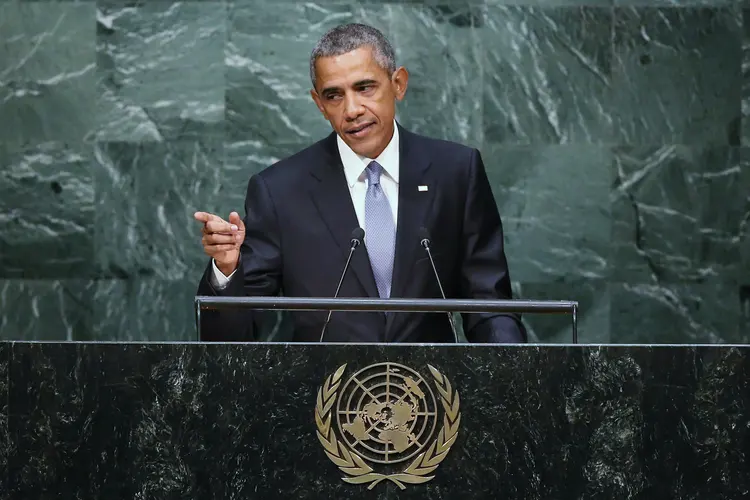
44th President of the United States | Nobel Peace Prize Laureate
Barack Hussein Obama II made history on November 4, 2008, when he was elected the 44th President of the United States, becoming the first African American to hold the nation's highest office. Running on a platform of hope and systemic change, his presidency was defined by major economic stabilization, sweeping healthcare reform, and a shifting approach to American foreign diplomacy.
Early Life and Multicultural Roots
Barack Obama was born on August 4, 1961, in Honolulu, Hawaii. His unique background shaped his global perspective:
- Parents: His mother, Stanley Ann Dunham, was a white American anthropologist from Kansas, and his father, Barack Obama Sr., was a Kenyan economist.
- Childhood: His parents divorced when he was two years old. After his mother remarried an Indonesian student named Lolo Soetoro, Obama lived in Jakarta, Indonesia, from ages six to ten.
- Return to Hawaii: He returned to Honolulu in 1971 to live with his maternal grandparents, Madelyn and Stanley Dunham, and graduated from the prestigious Punahou School in 1979.
Academic Excellence and Community Organizing
Obama moved to the U.S. mainland for his higher education, unlocking a swift trajectory through academia and community advocacy:
Higher Education
He spent two years at Occidental College in Los Angeles before transferring to Columbia University in New York City, graduating with a degree in political science in 1983.
Chicago Grassroots
In 1985, Obama relocated to Chicago to work as a community organizer. As the director of the Developing Communities Project, he worked closely with low-income families on the city's South Side to improve local housing conditions and job training.
Harvard Law School
In 1988, he entered Harvard Law School. He earned nationwide attention when he was elected the first African American president of the Harvard Law Review, ultimately graduating magna cum laude in 1991.
Family Life: While working as a summer associate at a Chicago law firm in 1989, he met Michelle Robinson, a fellow attorney who served as his advisor. They married in 1992 and had two daughters, Malia (born 1998) and Natasha, known as Sasha (born 2001).
The Path to the White House
Upon returning to Chicago, Obama taught constitutional law at the University of Chicago Law School and practiced civil rights law. His electoral journey progressed quickly:
- Illinois State Senate (1997–2004): Representing the 13th District, he focused on healthcare reform, labor rights, and law enforcement ethics.
- U.S. Senate (2005–2008): He rose to national prominence after delivering a dynamic keynote address at the 2004 Democratic National Convention. Later that year, he was elected to the U.S. Senate with a historic 70% majority in Illinois.
- The 2008 Campaign: In February 2007, Obama announced his bid for the presidency. After an intense primary campaign against Senator Hillary Clinton, he secured the Democratic nomination and defeated Republican Senator John McCain in the general election.
The Obama Presidency (2009–2017)
Taking office during the peak of the Great Recession, President Obama faced immense domestic and international challenges.
Major Domestic Achievements
He signed the American Recovery and Reinvestment Act of 2009 to save jobs, revive infrastructure, and stabilize financial institutions. Beyond economic rescue, the Affordable Care Act (Obamacare) stood as his hallmark domestic initiative. His administration also oversaw social landmarks, including the repeal of "Don't Ask, Don't Tell" and public advocacy leading to the federal validation of same-sex marriage.
Foreign Policy and Diplomacy
In October 2009, he was awarded the **Nobel Peace Prize** for his extraordinary efforts to strengthen international diplomacy. While overseeing a troop surge in Afghanistan and the withdrawal of combat operations in Iraq, his security cabinet authorized the 2011 mission eliminating Osama bin Laden. His second term focused on normalization milestones, including restoring historic diplomatic ties with Cuba and negotiating the Joint Comprehensive Plan of Action (the Iran Nuclear Deal).
Post-Presidency and Legacy
Since leaving office in January 2017, Obama has remained active in public life. Through the Obama Foundation, he and Michelle focus on mentoring young leaders worldwide. He has written several best-selling memoirs detailing his time in office, including A Promised Land (2020). His legacy endures as an inspiring symbol of social progress, though his policies remain central to ongoing conversations regarding healthcare, economics, and foreign intervention.

