

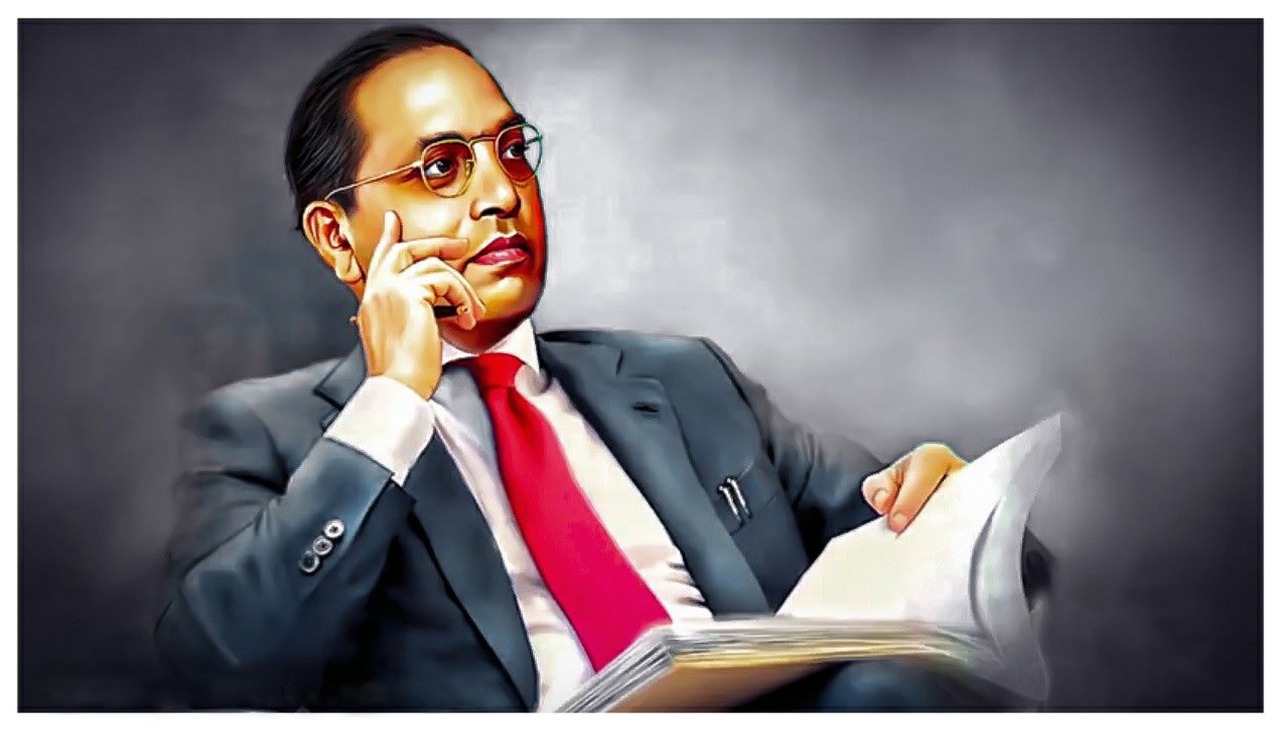
Jurist, Social Reformer, and Father of Modern India
Dr. Bhimrao Ramji Ambedkar (14 April 1891 – 6 December 1956) was a monumental Indian jurist, economist, statesman, and social reformer. He was the chief architect of the Constitution of India and served as the nation’s first Minister of Law and Justice.
Affectionately remembered as Babasaheb, Dr. Ambedkar dedicated his life to fighting social discrimination against the untouchables (Dalits), women, and labor communities. His journey from an impoverished, socially marginalized child to the intellectual titan of a newly independent nation remains an enduring symbol of resistance and human dignity.
Early Life, Discrimination, and Unparalleled Education
Ambedkar was born in the military cantonment town of Mhow (now in Madhya Pradesh) into a Marathi family from the Mahar caste, which was treated as untouchable under the rigid Hindu social system. Despite his father serving as an officer in the British Indian Army, young Bhimrao faced severe discrimination at school, where he and other Dalit children were isolated and denied even the right to sit inside the classroom or drink water unless it was poured by a higher-caste person.
Driven by a fierce intellect, Ambedkar broke through these systemic barriers, embarking on an academic journey unmatched by most of his contemporaries:
- Elphinstone College (1912): He became the first person from his caste to graduate with a degree in Economics and Political Science from the University of Bombay.
- Columbia University (1915–1917): Financed by a scholarship from the Maharaja of Baroda, he earned two Master's degrees and a Ph.D. in Economics from New York.
- London School of Economics & Gray's Inn (1921–1923): He completed a Master of Science and a Doctor of Science (D.Sc.) in Economics at the LSE, while simultaneously qualifying as a Barrister-at-Law at Gray's Inn.
Crusader Against Untouchability
Upon returning to India, Dr. Ambedkar realized that academic brilliance did not shield him from the venom of untouchability. He decided to launch an organized crusade for civil rights:
Landmark Mass Mobilizations
The Mahad Satyagraha (1927): He led a historic non-violent march in Mahad, Maharashtra, to assert the right of Dalits to use water from the public Chardar Tank. When upper-caste groups "purified" the tank with cow dung and urine, Ambedkar's movement publically burned the Manusmriti (an ancient text justifying the caste hierarchy) as a symbol of rejection.
The Kalaram Temple Entry (1930): He launched a massive, peaceful protest outside the Kalaram Temple in Nashik, demanding spiritual and social parity.
The Poona Pact (1932)
Ambedkar advocated for separate electorates for the "Depressed Classes" to guarantee political representation, a demand the British government granted. However, Mahatma Gandhi fiercely opposed this, fearing it would permanently divide Hindu society, and went on a fast-unto-death in Yerwada Jail. To save Gandhi’s life, Ambedkar signed the Poona Pact, which surrendered separate electorates in exchange for a significantly higher number of reserved seats within a unified electorate.
Architectural Feats: The Cabinet and The Constitution
When India gained independence on 15 August 1947, Prime Minister Jawaharlal Nehru invited Dr. Ambedkar to join the cabinet as India’s first Minister of Law and Justice. Shortly after, the Constituent Assembly appointed him as the Chairman of the Constitution Drafting Committee.
The Architectural Mind of Babasaheb
Fundamental Rights
Guaranteed absolute equality, freedom of speech, and religious expression for all citizens.
Social Safety
Officially outlawed "untouchability" in any form under the landmark Article 17.
Institutional Balance
Created a strong, unified federal structure balanced by a completely independent judiciary.
For nearly three years, Ambedkar meticulously parsed and stitched together frameworks from global constitutions, synthesizing them into a cohesive manual for the world's most complex democracy. He fought passionately for:
- Article 17: The constitutional abolition of "untouchability" in any form, making its practice a punishable crime.
- Article 32: The Right to Constitutional Remedies, which he termed the "Heart and Soul of the Constitution," as it allowed citizens to directly approach the Supreme Court if their fundamental rights were violated.
The Hindu Code Bill and Resignation
As Law Minister, Ambedkar drafted the Hindu Code Bill, a progressive legislative reform aimed at granting equal rights to women in inheritance, marriage, and divorce. When orthodox factions within and outside the government stalled the bill, an uncompromising Ambedkar resigned from the cabinet in 1951, proving that his commitment to gender equity outweighed political power.
The Ultimate Conversion and Legacy
Throughout his life, Ambedkar maintained that political freedom was meaningless without social democracy. Believing that Hinduism could never truly rid itself of the caste system, he fulfilled a vow he made decades prior: “I was born a Hindu... but I will not die a Hindu.”
On 14 October 1956, at a historic ceremony in Nagpur (Deekshabhoomi), Dr. Ambedkar formally converted to Buddhism, alongside half a million of his followers, founding the Navayana (Neo-Buddhist) movement.
“I have cherished the ideal of a democratic and free society in which all persons live together in harmony and with equal opportunities...”
Posthumous Recognition
Only weeks after the mass conversion, on 6 December 1956, Dr. Ambedkar passed away peacefully in his sleep at his home in Delhi. In 1990, India awarded him its highest civilian honor, the Bharat Ratna, posthumously.
Today, Dr. Ambedkar’s legacy extends far beyond India's borders. His theories on economics, state socialism, and human rights continue to inspire global marginalized communities. His statues, holding the blue-bound Constitution, stand across India as a persistent reminder that a nation's true strength lies in how it treats its most vulnerable citizens.

