

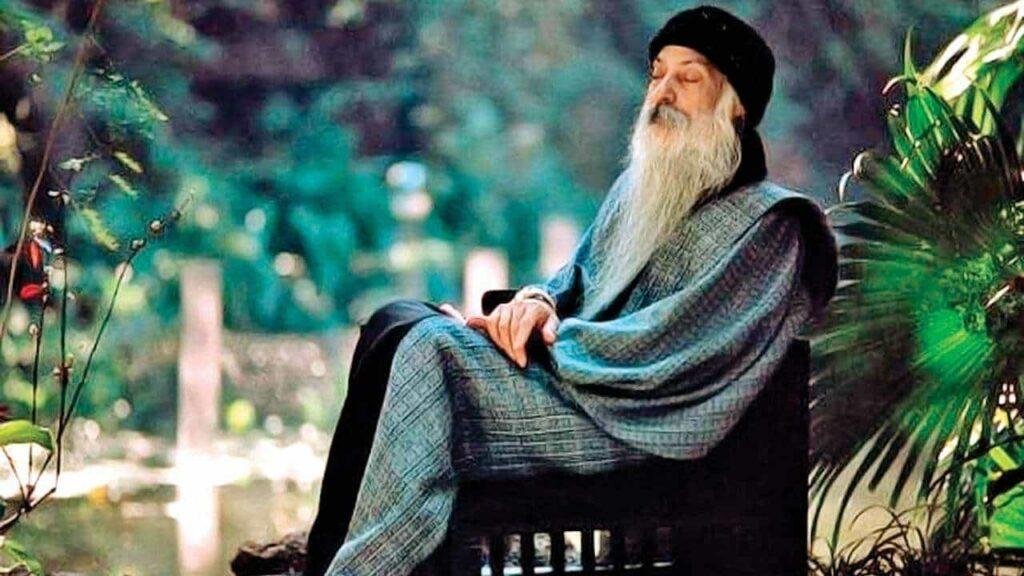
Chandra Mohan Jain | Bhagwan Shree Rajneesh
Osho (born Chandra Mohan Jain, later known as Bhagwan Shree Rajneesh) was a charismatic and highly controversial Indian philosopher, mystic, and spiritual leader. He gained worldwide prominence in the 1970s and 1980s for his radical critique of traditional religions, social institutions, and political systems. Advocating for absolute personal freedom, meditation, and a celebration of life that fused Western material sciences with Eastern spiritual traditions, Osho left behind a complex legacy that continues to influence global alternative spirituality.
Early Life and Academic Brilliance
Born on December 11, 1931, in Kuchwada, a small village in the Central Provinces of British India (now Madhya Pradesh), he spent his early childhood raised by his maternal grandparents. This unstructured upbringing fostered a fiercely independent spirit.
- The Spiritual Crisis: At the age of 21, on March 21, 1953, while sitting under a tree in Bhanvartal Park in Jabalpur, he claimed to have experienced intense spiritual enlightenment.
- The Academic Career: Despite his mystical preoccupations, he excelled academically. He earned a B.A. in Philosophy from D.N. Jain College in 1955 and completed his M.A. in Philosophy from the University of Sagar in 1957. Shortly after, he became a professor of philosophy at Jabalpur University, where his charismatic and unconventional lectures drew packed classrooms.
The Rise of "Acharya" Rajneesh
By the mid-1960s, he abandoned his academic career to travel across India under the name Acharya Rajneesh (Teacher Rajneesh). He established himself as a powerful public speaker, delivering radical lectures that openly challenged traditional Hindu orthodoxies, the socialist policies of Mahatma Gandhi, and institutionalized religions.
The Dynamic Meditation Revolutionary
In 1970, Rajneesh introduced Dynamic Meditation, a revolutionary chaotic practice involving intense breathing, catharsis, chanting, and silent stillness designed to break down psychological conditioning. Around this time, he began initiating followers into neo-sannyas, requiring them to wear traditional ochre robes, a mala (necklace) with his photograph, and to adopt new spiritual names. He was henceforth referred to as Bhagwan Shree Rajneesh.
The Pune Ashram Era (1974–1981)
As his teachings attracted an influx of Western seekers, intellectuals, and psychologists, he moved his headquarters to Pune (then Poona) in 1974. The Koregaon Park ashram became a hotbed of spiritual experimentation, blending ancient meditation techniques with Western human-potential therapies (like encounter groups and primal scream therapy).
His discourse grew increasingly uninhibited. His lectures advocating for a healthy, un-repressed perspective on human sexuality earned him the media label "The Sex Guru," which frequently polarized the Indian public and local authorities.
The Oregon Experiment: Rajneeshpuram (1981–1985)
In 1981, amidst mounting tax and regulatory pressures in India, Rajneesh relocated to the United States. Under the direct operational management of his assertive personal secretary, Ma Anand Sheela, his movement purchased a massive, 64,000-acre ranch in Wasco County, Oregon, to build a self-sustaining utopian city named Rajneeshpuram.
Escalation and Collapse
The rapid growth of Rajneeshpuram ignited intense hostility with native Oregon residents and state officials over zoning laws and land-use conflicts. As tensions escalated, the commune's leadership resorted to drastic measures to protect their interests:
- The Bio-Terror Attack: In 1984, to suppress local voter turnout for an upcoming county election, members of the commune orchestrated a salmonella poisoning outbreak in local restaurants, sickening over 750 people. It remains the largest biological terror attack on U.S. soil.
- The Downfall: Following internal fracturing, Ma Anand Sheela fled the commune in 1985, leaving behind evidence of extensive wiretapping, arson, and assassination plots. Rajneesh denied any knowledge of these crimes and blamed Sheela's faction. He was arrested in October 1985 while attempting to leave the country in a charter plane, pleaded guilty to immigration fraud violations, and was deported from the United States.
The Birth of Osho and Final Years
After being denied entry by over twenty countries during an international "world tour," Rajneesh returned to his ashram in Pune, India, in 1987.
In 1989, he officially dropped the title "Bhagwan" and adopted the name Osho, derived from the historical Japanese term oshō (a title of respect for a Zen master) or, as he suggested, adapted from William James's word "oceanic" (dissolving into the ocean). His health deteriorated rapidly during this phase, which his followers alleged was the result of thallium or radiation poisoning suffered during his brief detention in U.S. federal prisons.
Osho passed away on January 19, 1990, at the age of 58.
"NEVER BORN, NEVER DIED.
ONLY VISITED THIS PLANET EARTH BETWEEN
DEC 11, 1931 – JAN 19, 1990."
Philosophy and Contemporary Legacy
Osho rejected all dogmatic belief systems, asserting that true religiousness is a matter of personal experience, not blind faith. His core philosophical concept was the "Zorba the Buddha"—a synthesis of the sensual, material enjoyments of the Greek character Zorba with the serene spiritual detachment of Gautama Buddha.
Today, his global network lives on through the Osho International Meditation Resort in Pune and various meditation centers worldwide. His recorded lectures, transcribed into hundreds of books translated into dozens of languages, continue to command a massive global audience, leaving behind a legacy balanced between brilliant philosophical insights and a cautionary tale of communal isolation.

