

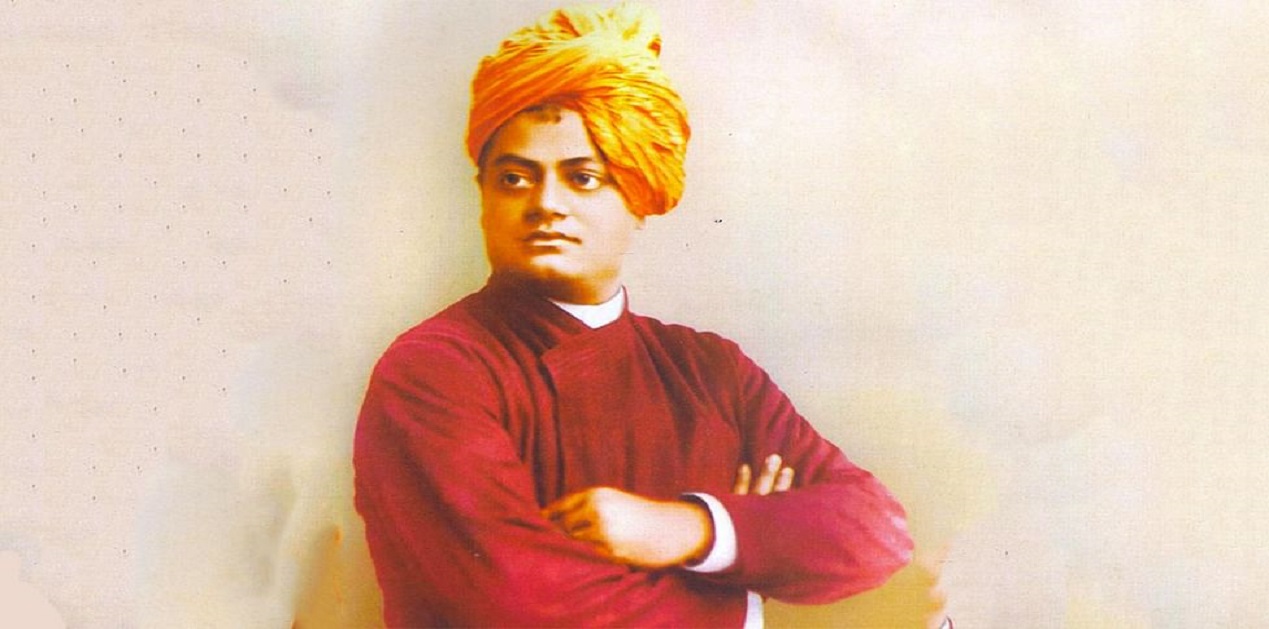
Philosopher, Monk, and the Patriotic Saint of India
Swami Vivekananda (12 January 1863 – 4 July 1902), born Narendranath Datta, was a monumental Indian monk, philosopher, author, and religious teacher. He was the chief disciple of the 19th-century mystic Ramakrishna Paramahansa and a key figure in the introduction of the Indian philosophies of Vedanta and Yoga to the Western world.
Remembered as a spiritual genius of commanding intellect and power, Vivekananda is credited with raising interfaith awareness and bringing Hinduism to the status of a major world religion during the late 19th century. In India, he is revered as a "patriotic saint," and his birthday is celebrated nationwide as National Youth Day.
Early Life, Intellect, and Spiritual Crisis
Narendranath was born in Calcutta (now Kolkata) into an affluent, aristocratic Bengali family. His father, Vishwanath Datta, was an attorney at the Calcutta High Court with a progressive outlook, while his mother, Bhuvaneshwari Devi, was a deeply religious woman who instilled in him a strong sense of purity and self-discipline.
From a young age, Narendranath displayed a multifaceted genius:
- Intellectual Brilliance: He excelled in philosophy, history, social science, and literature. He voraciously read Western philosophers like Herbert Spencer, John Stuart Mill, and Immanuel Kant alongside classical Hindu scriptures.
- The Sceptic's Quest: During his college years, his rational mind revolted against blind superstition and idol worship. He joined the Brahmo Samaj, a modern religious movement, but its abstract doctrines failed to satisfy his deep spiritual hunger. He went from teacher to teacher asking a single, burning question: "Have you seen God?" No one could give him a direct answer until he met Ramakrishna.
The Master's Touch: Meeting Ramakrishna
In 1881, Narendranath met Sri Ramakrishna at the Dakshineswar Kali Temple. When Narendra posed his customary question, Ramakrishna replied without a moment's hesitation:
"Yes, I have seen Him. I see Him as I see you here, only in a much intenser sense."
Narendra was initially skeptical of Ramakrishna’s ecstatic mystical states, but the Master's unyielding purity, boundless love, and profound spiritual realizations eventually broke down Narendra's intellectual defenses. Over the next five years, Ramakrishna transformed the proud, rationalist youth into a spiritual giant, teaching him the core philosophy of Advaita Vedanta (non-dualism)—that all living beings are manifestations of the divine, and serving mankind is the highest form of worshiping God.
Following Ramakrishna’s passing in 1886, Narendra and a core group of disciples took formal monastic vows. Narendra assumed the name Swami Vivekananda (meaning "the bliss of discerning wisdom").
The Wandering Monk (Parivrajaka)
In 1888, Vivekananda left the monastery to traverse the length and breadth of India as a penniless, wandering monk (Parivrajaka). Carrying only a water pot (kamandalu) and his two favorite books—the Bhagavad Gita and The Imitation of Christ—he walked for five years.
The Visions of Vivekananda
The Palace & The Hut
He lived with maharajas and slept in the huts of the untouchables, witnessing India's deep material poverty alongside its profound spiritual wealth.
Rock at Kanyakumari
At India's southernmost tip, he meditated for three days and conceptualized a mission to uplift the masses through a synthesis of Eastern spirituality and Western science.
He realized that teaching metaphysics to starving masses was futile. He famously declared: "Religion is not for empty stomachs." He resolved to travel to the West to seek material help and scientific knowledge for his motherland, offering India's spiritual wisdom in return.
The Parliament of Religions (Chicago, 1893)
Vivekananda’s journey to the West reached its historic climax when he represented Hinduism at the inaugural Parliament of the World's Religions in Chicago on September 11, 1893.
When he took the stage, he did not begin with a rigid theological discourse. Instead, he addressed the audience of 7,000 people with the words:
"Sisters and Brothers of America!"
The crowd erupted into a standing ovation that lasted for several minutes. In a series of brilliant speeches, he spoke of universal tolerance, the harmony of all religious paths, and criticized religious bigotry. Overnight, the unknown Indian monk became a global celebrity. The New York Herald wrote: "He is undoubtedly the greatest figure in the Parliament of Religions. After hearing him, how foolish it seems to send missionaries to this learned nation."
Global Mission and Philosophy
For nearly four years, Vivekananda toured the United States and Europe, lecturing extensively and founding the Vedanta Society in New York and London. He won over brilliant Western minds, including Harvard professor William James and Nikola Tesla, and attracted deeply devoted disciples like Margaret Noble (later known as Sister Nivedita).
The Four Yogas
Vivekananda structured spiritual practice into four comprehensive paths tailored to different human temperaments, making ancient Vedic thought practical for modern life:
| Path / Yoga | Core Practice | Target Temperament |
|---|---|---|
| Karma Yoga | The Path of Unselfish Action | The Active Person |
| Bhakti Yoga | The Path of Devotion and Love | The Emotional Person |
| Raja Yoga | The Path of Meditation and Mental Control | The Mystical / Scientific Person |
| Jnana Yoga | The Path of Knowledge and Discernment | The Rational / Intellectual Person |
Return to India and the Ramakrishna Mission
Upon his triumphal return to India in 1897, Vivekananda was greeted as a national hero. He delivered a series of electrifying lectures known as Lectures from Colombo to Almora, aiming to rouse the sleeping national consciousness of India, urging the youth to develop "muscles of iron and nerves of steel."
On May 1, 1897, he founded the Ramakrishna Mission at Belur Math near Calcutta. This was a revolutionary step in Indian monasticism, blending the ideal of personal salvation with active, organized social service. The mission’s motto perfectly summarized his philosophy: Atmano mokshartham jagat hitaya cha ("For one's own liberation and for the welfare of the world"). The mission immediately plunged into plague relief, famine rescue, and building schools and hospitals.
Mahasamadhi and Eternal Legacy
Swami Vivekananda lived an intense, hyper-active life that took a severe toll on his physical health. He predicted that he would not live to see forty years of age.
On July 4, 1902, at the age of 39, he spent his day teaching, meditating at Belur Math, and praying. In the evening, he retired to his room, entered a state of deep meditation, and attained Mahasamadhi (a yogi's conscious exit from the physical body).
Though he lived a brief life, his impact was colossal. He shook India out of its centuries-long cultural lethargy and injected a sense of self-respect that laid the spiritual foundation for India's freedom struggle. Leaders like Mahatma Gandhi, Subhas Chandra Bose, and Rabindranath Tagore acknowledged his profound influence.
Vivekananda remains an eternal icon of strength, clear-headed logic, and compassionate action—a man who bridged the East and the West, science and spirituality, ancient faith and modern progress.

